Modern lighting algorithms can calculate lumens and coverage with pinpoint accuracy, yet none can replicate the soul of a hand-cut crystal chandelier. In an age of smart homes and app-controlled ambience, there’s something profoundly human about the way light dances through facets shaped by generations of artisans. Selecting the right size for your dining room isn’t just about measurements-it’s where engineering meets emotion, where room dimensions guide the choice but craftsmanship defines the experience. This guide bridges that gap, helping you balance precision with presence.
Mastering the dimensions: The golden rules of scale
Calculating diameter based on room size
One
widely accepted method for determining the ideal diameter of a chandelier begins with your room’s dimensions. Add the length and width of your dining space in feet, then use that number as the recommended diameter in inches. For example, in a 12 x 14-foot room, a chandelier between 26 and 28 inches in diameter strikes a balanced proportion. This rule provides a solid starting point-especially in spaces without a central dining table or in open-plan layouts where the fixture acts as a visual anchor. While not every room fits neatly into this formula, it offers a reliable framework for avoiding underwhelming or overwhelming choices.
Proportional width relative to your dining table
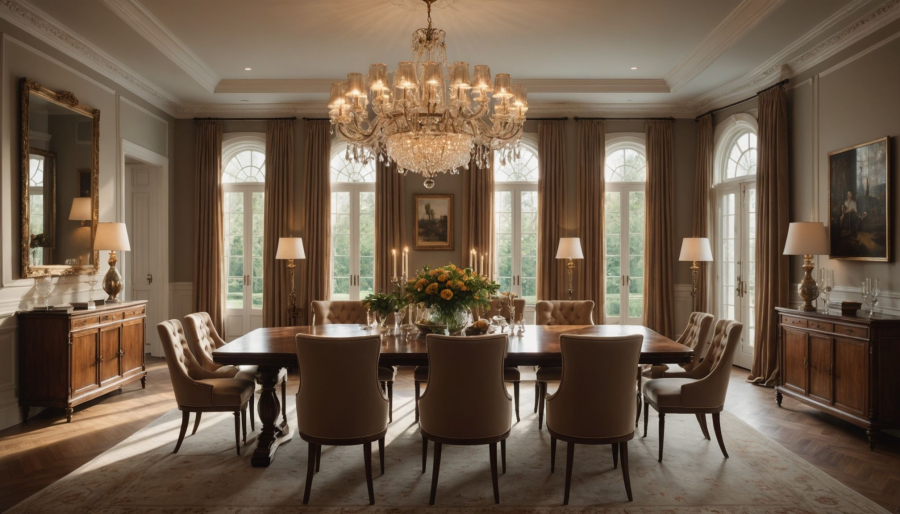
When your chandelier hovers over a dining table, proportion becomes even more critical. As a general guideline, the fixture should measure between half and two-thirds of the table’s width. A 48-inch table, for instance, pairs well with a chandelier between 24 and 32 inches across. This ensures the light source enhances the setting without dominating it. The material and design also influence perception: a crystal chandelier, with its layered prisms and reflective qualities, carries more visual weight than a minimalist metal design of the same size. Therefore, in rooms with lower ceilings or more intimate seating arrangements, opting for the lower end of the proportional range can prevent a sense of crowding.
The strategic importance of hanging height
Placement height is just as crucial as diameter. For standard 8- to 9-foot ceilings, the bottom of the chandelier should sit between 30 and 36 inches above the tabletop. This range allows for clear sightlines across the table while ensuring the fixture remains a focal point rather than a hazard. In rooms with higher ceilings-10 feet or more-add roughly three inches of hanging length for each additional foot of height. Adjustable chains or rods make this customization possible. Moreover, the interplay between dimmable LED lighting and hand-cut crystal enhances ambiance; lower light levels accentuate refraction patterns, creating a more intimate atmosphere.
| Room Dimensions (ft) | Recommended Chandelier Diameter (in) | Compatible Table Width (in) |
|---|---|---|
| 10 x 10 | 20 | 36-42 |
| 12 x 14 | 26-28 | 44-48 |
| 14 x 16 | 30-32 | 50-54 |
| 18 x 20 | 38-40 | 60-72 |
For those seeking the pinnacle of French craftsmanship, investing in a masterpiece like a chandelier in crystal ensures your dining room achieves both historical depth and perfect illumination. The precision of hand-cut crystal facets interacts dynamically with varying light intensities, making proper sizing essential for maximizing brilliance without glare.
Design styles and the impact of visual volume
Light airy designs vs. dense crystal patterns
Not all chandeliers of the same diameter occupy space equally. A slender, open-frame design with sparse crystal accents feels lighter and more suitable for contemporary or minimalist interiors. In contrast, a multi-tiered, densely beaded crystal fixture-even if measured the same in inches-can dominate a room due to its visual density. The number of prisms, the complexity of the frame, and the depth of cut all contribute to this perception. Hand-cut crystal, in particular, casts more intricate shadows and rainbows, which can amplify its presence. Therefore, when room size suggests a larger fixture, consider whether a more delicate design might serve better than a heavily ornamented one.
Adapting to contemporary and classic interiors
Today’s crystal lighting merges heritage with modernity. Collections that incorporate mouth-blown crystal techniques can still feel current when paired with clean-lined architecture or neutral palettes. The key lies in balance: a bold chandelier becomes the centerpiece in an otherwise understated room, allowing its craftsmanship to shine. In traditionally styled dining rooms, a larger, ornate fixture reinforces the grandeur. In modern spaces, a smaller but highly detailed chandelier-perhaps from a line known for precision of hand-cut crystal-can act as a refined nod to artistry without overwhelming the décor.
- Number of tiers: Multi-tiered designs increase perceived height and volume.
- Density of crystals: More prisms create greater light refraction and visual weight.
- Frame finish: Gold or brass tones tend to draw more attention than chrome or silver.
- Presence of shades: Fabric or glass shades can soften the fixture’s silhouette.
Another consideration is the timeless French art de vivre-the idea that beauty and function coexist. A chandelier isn’t merely illumination; it’s a declaration of how a room is lived in. Whether in a formal dining space or an open-concept living area, the fixture should reflect both the scale of the room and the rhythm of daily life.
Practical installation and atmospheric control
Supporting the weight of luxury lighting
Crystal chandeliers are not only visually substantial-they are often physically heavy. A large fixture can weigh anywhere from 20 to over 50 pounds, requiring a reinforced ceiling junction box and professional installation. Attempting to mount such a piece on a standard electrical box risks instability and potential damage. Always consult a licensed electrician, especially when dealing with high ceilings or plasterwork. The installation process should not be rushed; secure mounting ensures both safety and longevity.
Beyond structural concerns, consider the quality of light. While crystal disperses light beautifully, over-lighting a dining space can dull its effect. Using fewer bulbs at higher wattages-or dimmable LEDs-preserves clarity and sparkle. Many modern crystal pieces integrate LED dimming technology, allowing you to shift from bright task lighting during meals to soft ambient glow in the evening. This flexibility enhances both functionality and mood, making the fixture adaptable to different occasions.
Matching crystal clarity with interior lighting goals
The optical properties of crystal depend heavily on the light source. High-quality, lead-containing crystal refracts light more brilliantly, but only when paired with the right color temperature. Warm white LEDs (2700K-3000K) complement the warmth of traditional interiors and enhance gold or amber undertones in crystal. Cooler temperatures, while energy-efficient, can make crystal appear flat or clinical. Additionally, the clarity and cut precision of each prism affect how light breaks into rainbows. Hand-cut facets, with their subtle asymmetries, often produce more organic and dynamic patterns than machine-cut equivalents.
- Ensure junction boxes are rated for heavy fixtures.
- Use dimmable LEDs to control ambiance and longevity.
- Match color temperature to your décor’s undertones.
The final result should feel effortless-a chandelier that appears to float, casting just enough light to animate the room without calling attention to its mechanics. It’s in this harmony that the true artistry of French crystal-making reveals itself.
The key questions
I inherited a large chandelier; how can I make it work in a small room?
Start by assessing clearance: ensure at least six feet of vertical space from floor to fixture and two feet of horizontal clearance from walls or furniture. To balance its visual weight, keep surroundings minimalist-avoid heavy drapes or oversized furniture. Consider placing it in a room with high ceilings to provide breathing room, and use dimmable lighting to soften its presence when needed.
How do dimmable LEDs affect the refraction of hand-cut crystal prisms?
Dimmable LEDs allow precise control over light intensity, which directly influences how crystal prisms refract and scatter light. At lower settings, the focused beams create sharper rainbows and highlights on individual facets. High-quality crystal responds exceptionally well to dimming, enhancing depth and luminosity without sacrificing clarity, especially when using warm-color LEDs.
Is the trend moving toward oversized or understated dining room fixtures?
Current design trends favor statement pieces, but with restraint-many opt for moderately oversized chandeliers that command attention without overwhelming the space. The key is balance: a larger fixture in a high-ceilinged room with minimalist furnishings creates drama, while smaller, intricately detailed pieces work better in cozy settings. The shift is less about size and more about intentionality.
Can a crystal chandelier work in a modern, minimalist dining room?
Absolutely-when chosen with care. Select a design with clean lines and fewer ornamental elements. A single-tier crystal piece with a simple metal frame can add elegance without clashing with minimalist aesthetics. The secret is in the details: opt for clear, high-clarity crystal and avoid heavy brasswork to maintain a contemporary feel.
What should I consider when choosing between ceiling-mounted and semi-flush chandeliers?
Ceiling-mounted chandeliers work best in spaces with high ceilings, where they can hang at an ideal viewing height. Semi-flush designs are better for lower ceilings, ensuring safety and proportion. Consider the fixture’s depth: deeper chandeliers require more clearance. Always measure from floor to ceiling before deciding, and prioritize secure mounting hardware for heavier models.
